CAFE (Community Action for Education)
May 17, 2023: Brown vs. Board of Education
Meeting co-sponsored by CAFE (Community Action for Education)

******************************
Mar 2, 2023: Re-Launching of CAFE
Join Us for the Re-Launching of CAFE
(Community Action for Education)
When: Thursday, March 2, 2023
Where: Civil Rights Heritage Center 1040 W. Washington South Bend, IN
Time: 6:00 P.M.

Please Download Cafe_Flyer3.2.2023 for a flyer about the event.
*****************************
Community Action for Education, known simply as,
CAFÉ, creates a public space for the community to discuss issues and solve problems to ensure that ALL children have access to a high-quality education. Our mission: protect the PUBLIC in public education.
Meets next Tuesday, February 22, 2022 at 6 PM.
Join us to participate over Zoom in a discussion of action
priorities for the coming year.
******************************
CONSENT DECREE
WEDNESDAY, MARCH 31, 2021 | 6:00 – 7:30PM
Monthly Conversation with CAFE
Join CAFE for our monthly virtual community conversation to discuss necessary next steps in addressing critical issues in our schools, including:
— Revisiting the district’s Consent Decree
— Exploring current reorganization plans for SBCSC
— Discussing proposed revisions to the student Code of Conduct
— Examining our schools’ CARES Act funding
CAFE meetings are participatory and open to the public. You may access the meeting via Zoom.
CONSENT DECREE
At their March 15 Meeting, the SBCSC BOARD OF SCHOOL TRUSTEES will discuss current efforts to comply with provisions of the Consent Decree.
The SBCSC has experienced over 40 years of Federal Oversight.
Where are we now? The discussion will continue on Wednesday March 31, 2021 at 6 pm, at the March meeting of CAFÉ – COMMUNITY ACTION FOR EDUCATION.
***************************
A Vision Statement on Racial Equity and Antiracist policies in SBCSC
by Stuart Greene (3/12/2021)
Download Board Equity Statement
*************************************
“VIEWING EDUCATION THROUGH A RACIAL EQUITY LENS”
A PRESENTATION BY DR. PATRICIA PAYNE
Director of the Racial Equity Office
Indianapolis Public Schools, 10/20/20
AT THE OCTOBER 20, 2020 PUBLIC FORUM OF THE
COMMUNITY FORUM FOR ECONOMIC JUSTICE
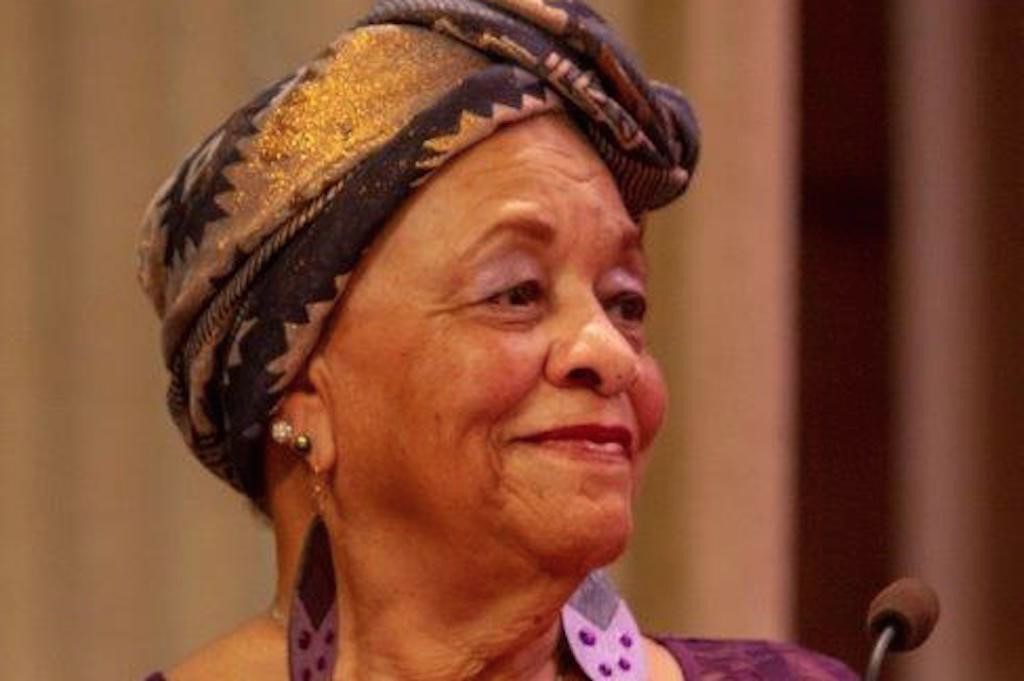
For 58 years, Dr. Payne has worked in the Indianapolis Public Schools district — pushing to make the district a more equitable place that meets the needs of all of its students, regardless of their skin color.
She spent the first 25 years as an elementary school teacher and the next 25 leading the district’s multicultural education office, spearheading the development of a Black history curriculum, among other initiatives. She retired in 2014 – for about 30 days! She returned to the district as an IPS administrator on special assignment.
At 79 years old, Payne now directs the IPS Racial Equity Office. In June of 2020, the Board of Trustees of the Indianapolis Board of School Trustees adopted an exciting and historic policy that they titled “RACIAL EQUITY MINDSET, COMMITMENT & ACTION.”
The opening statement of the policy reads: “Racial equity refers to the condition that would be achieved if one’s racial identity, in a statistical sense, did not determine how one fares.” It is a commitment to distribute resources based on need and to eliminate “policies, practices, attitudes, and cultural messages that reinforce differential outcomes or fail to eliminate them.”
Plan to join us on at 6:30 pm on Tuesday, Oct. 20, to learn more about the IPS policy and the lessons it provides for our local school leaders as they develop a strategic plan for the future.
BACKGROUND INFORMATION ON THE RACIAL JUSTICE COMMITMENTS FOR INDIANAPOLIS SCHOOLS
On June 25th, 2020, the Board of School Commissioners of the City of Indianapolis adopted Resolution No. 7863, BLACK LIVES MATTER, and Board Policy 1619, RACIAL EQUITY MINDSET, COMMITMENT & ACTION
******************************************************
THE PROBLEM OF PRIVATIZING AMERICA’S PUBLIC SCHOOLS

The Community Forum for Economic Justice, Community Action for Education, Michiana Advocates for Public Education, South Bend Chapter of Indiana Black Expo, Black Lives Matter South Bend, and The Civil Rights Heritage Center will sponsor an online showing of Backpack Full of Cash during the weekend of April 17 – 19, 2020.
Narrated by Matt Damon, this feature-length documentary explores the growing privatization of public schools and the resulting impact on America’s most vulnerable children. Filmed in Philadelphia, New Orleans, Nashville and other cities, BACKPACK FULL OF CASH takes viewers through the tumultuous 2013-14 school year, exposing the world of corporate-driven education “reform” where public education — starved of resources — hangs in the balance. See the trailer for this documentary at www.backpackfullofcash.com.
Based on recent developments, we feel there is a consistent effort to destroy traditional public education in South Bend, rather than to provide an alternative. And so we want to continue to learn about and to discuss the “education reform” movement.
Due to COVID-19 Stay-at-Home restrictions, we will make the video available online for a limited time (Friday, April 17 – Sunday, April 19) to those who register in advance. On Sunday, April 19, 2020, we will discuss the film at a virtual meeting that will begin at 3 P.M.
************************************************************
SCHOOL RESOURCE OFFICERS
From the Justice Policy Institute:
THE PRESENCE OF SCHOOL RESOURCE OFFICERS (SROs) IN AMERICA’S SCHOOLS
***************************************************************
FUNDING REFERENDUM FOR SOUTH BEND COMMUNITY SCHOOL CORPORATION
THE JUNE 2nd PRIMARY ELECTION WILL BE HELD IN JUST THREE WEEKS. ONE OF YOUR DECISIONS, IF YOU LIVE WITHIN THE BOUNDARIES OF THE SOUTH BEND SCHOOL CORPORATION, WILL CONCERN THE TWO SCHOOL FUNDING REFERENDUMS. HERE ARE SEVERAL SOURCES OF INFORMATION ABOUT SCHOOL FUNDING IN INDIANA THAT PROVIDE CONTEXT TO THE DECISION WE WILL BE MAKING. IN ADDITION, MAKE SURE TO EXPLORE THE “SOUTH BEND, VOTE YES“ WEBSITE, THAT CONTAINS EXTENSIVE DETAIL ABOUT WHY THE REFERENDUM IS IMPORTANT AND HOW THE FUNDS WILL BE USED.
The basics of school funding in Indiana: Difficulty defining Fairness
Jan 4, 2015 – Since the 1970s, Indiana has relied less on local property taxes to fund schools than neighboring states, with the state funding a larger share …
Indiana School Funding Basics – YouTube
This video is about the simple basics of school funding in Indiana. Category. Education. Show more. Show …
Mar 14, 2016 – Uploaded by Green Hat
Indiana School Funding Explained – YouTube
Indiana’s students deserve fully funded schools. ISTA explains the history behind Indiana public school …
Jan 13, 2020 – Uploaded by ISTAVideo
****************************************************************
THE SCHOOL TO PRISON PIPELINE
The Campaign to End the School to Prison Pipeline in South Bend
A report from the Community Forum for Economic Justice

***************************************************************
Children who are not in class cannot pass!
Failed classes lead to low GPAs!
When you can’t catch up, you want to give up!
No Diploma — don’t apply here!
No job and no money can lead to bad choices!
JOIN US, SEPT. 12, 2015 at the COMMUNITY FORUM ALL-DAY PROGRAM:
BREAK THE SCHOOL TO PRISON PIPELINE
***************************************************************************************
WOULD YOU LIKE TO BE ABLE TO EXPLAIN THE “SCHOOL TO PRISON PIPELINE” IN LESS THAN A MINUTE AND A HALF?
CHECK THIS OUT!!!
/www.youtube.com/watch?v=04pcSyzwoTg&feature=youtu.be
***************************************************************************************
NAACP TOWNHALL ON THE SCHOOL TO PRISON PIPELINE
*******************************************************************************************
READ ABOUT CHICAGO YOUTH POWER!!!
Voices of Youth in Chicago Education (VOYCE)
SB 100 prioritizes the creation of safe and orderly schools while seeking to address excessive use of the most severe forms of discipline. Under the legislation students can only be suspended, expelled or referred to an alternative school if all other “appropriate and available” alternatives are exhausted. In other words, suspensions and expulsions become the last resort, rather than the first response.
Additionally, the bill provides struggling students with academic and behavioral supports, and promotes fairness by holding public schools and charter schools to the same standards for school discipline. The final House vote count was 73 yes – 41 no, with broad support from both Republicans and Democrats. SB 100 is now awaiting the Governor’s signature.
The effort to pass SB 100 was led by VOYCE (Voices of Youth in Chicago Education), a group of mostly high school students from Chicago. They created the bill in 2012 to address the impact of out-of-school suspensions and expulsions on their peers and schools. For over two years, dozens of students traveled regularly to the Capitol in Springfield to educate their legislators on how disciplinary practices were pushing students out of school and into the juvenile and criminal justice systems.
**************************************************************
FINALLY, WE STILL HAVE A LOT TO DO!
WASHINGTON — Black boys as young as 10 may not be viewed in the same light of childhood innocence as their white peers, but are instead more likely to be mistaken as older, be perceived as guilty and face police violence if accused of a crime, according to new research published by the American Psychological Association.
http://www.apa.org/news/press/releases/2014/03/black-boys-older.aspx
********************************
Four articles that provide valuable background for discussion.
1. The American Civil Liberties Union (the ACLU)
www.aclu.org/fact-sheet/what-school-prison-pipeline
What is the School to Prison Pipeline?
This article describes the path to incarceration, that includes
– failing public schools,
– zero-tolerance and other school disciplinary policies,
– policing school hallways,
– disciplinary alternative schools, and
– court involvement and juvenile detention.
2. “Teaching Tolerance,” a project of the Southern Poverty Law Center
www.tolerance.org/magazine/number-43-spring-2013/school-to-prison
Who’s in the Pipeline?
“Students from two groups—racial minorities and children with disabilities—are disproportionately represented in the school-to-prison pipeline. African-American students, for instance, are 3.5 times more likely than their white classmates to be suspended or expelled, according to a nationwide study by the U.S. Department of Education Office for Civil Rights.”
3. “The School to Prison Pipeline: Time to Shut it Down.
http://neatoday.org/2015/01/05/school-prison-pipeline-time-shut/
From the neaToday, a publication of the NEA (National Education Association)
“Suspensions and expulsions are doing more harm than good. Schools are getting better results by rejecting Zero tolerance.”
4. “How to discipline students without turning school into a prison,” an article from the Atlantic Monthly, January 9, 2014
“New guidelines from the U.S. Departments of Justice and Education urge schools to abandon “zero-tolerance” policies.”